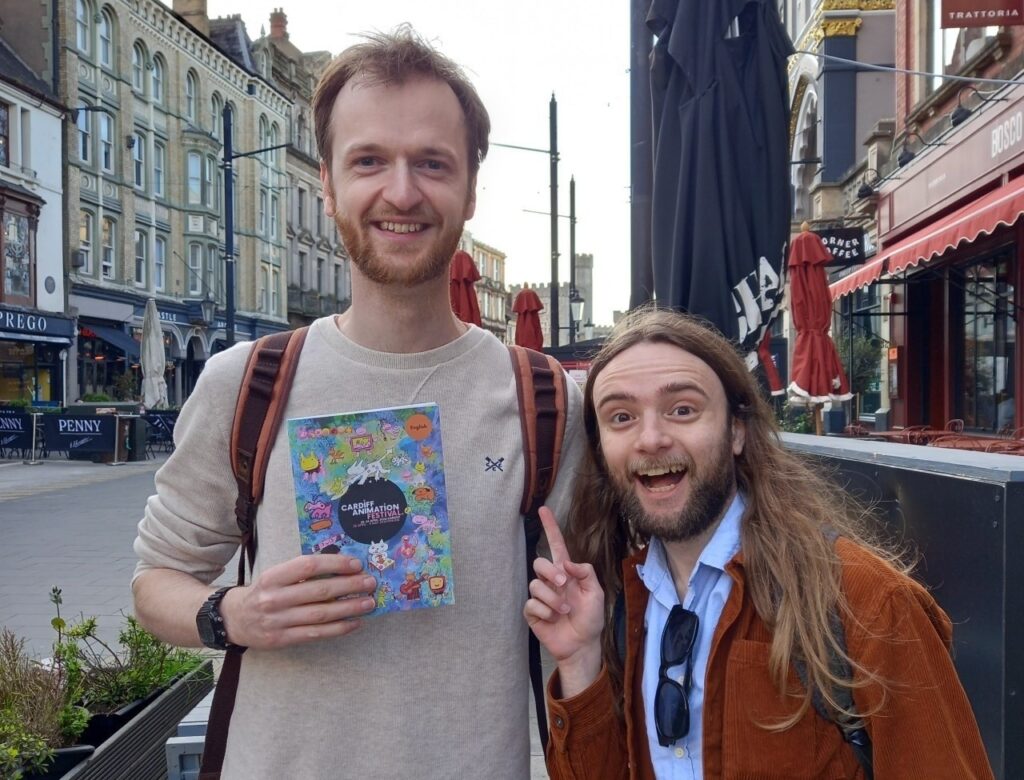
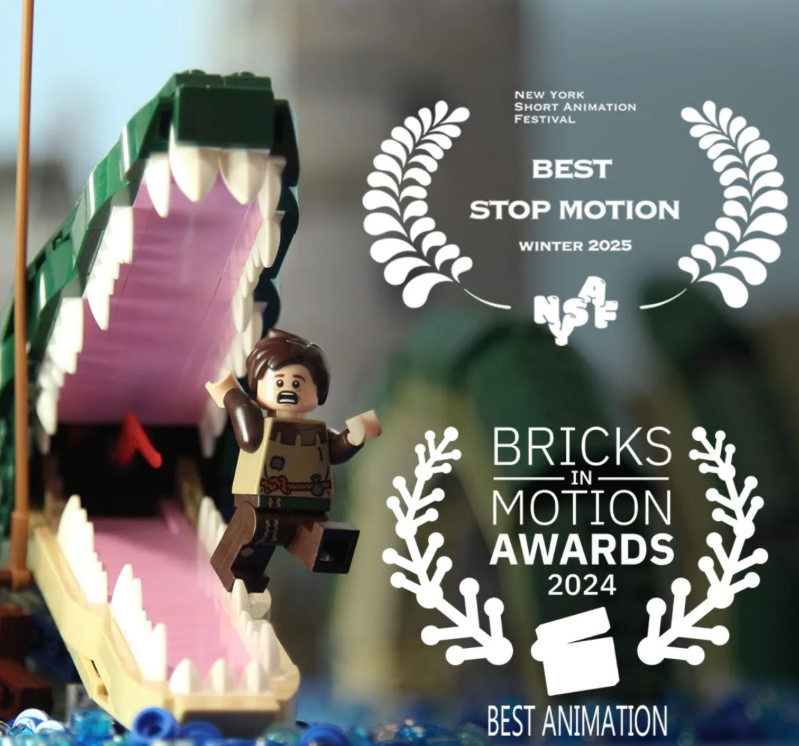
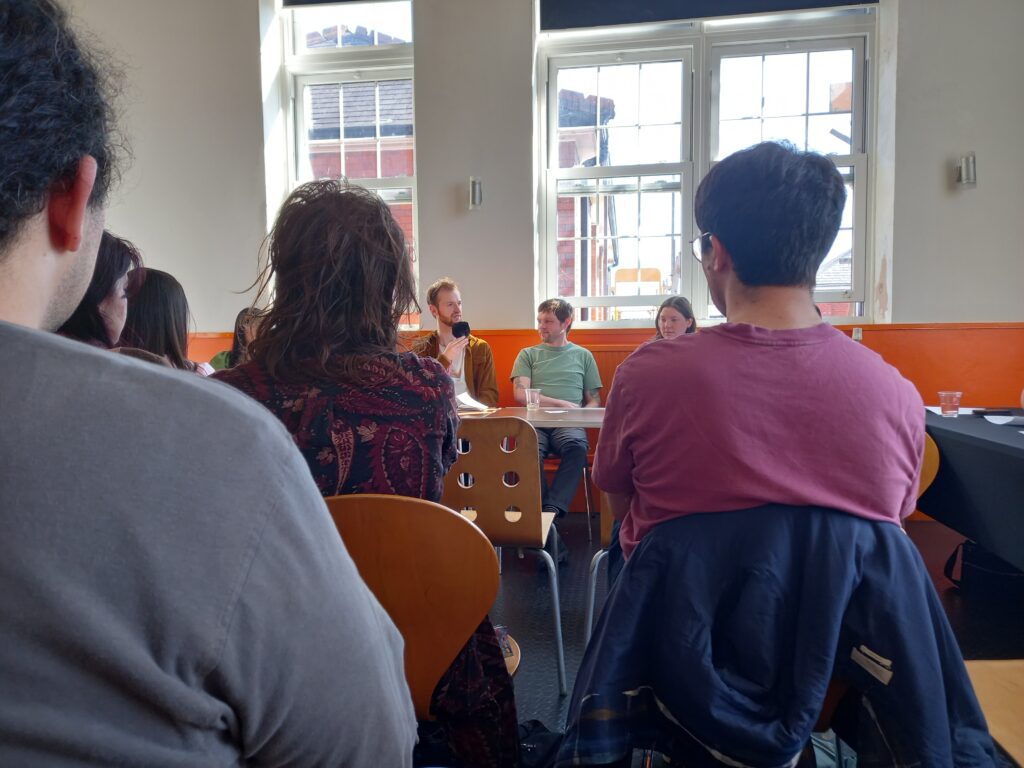
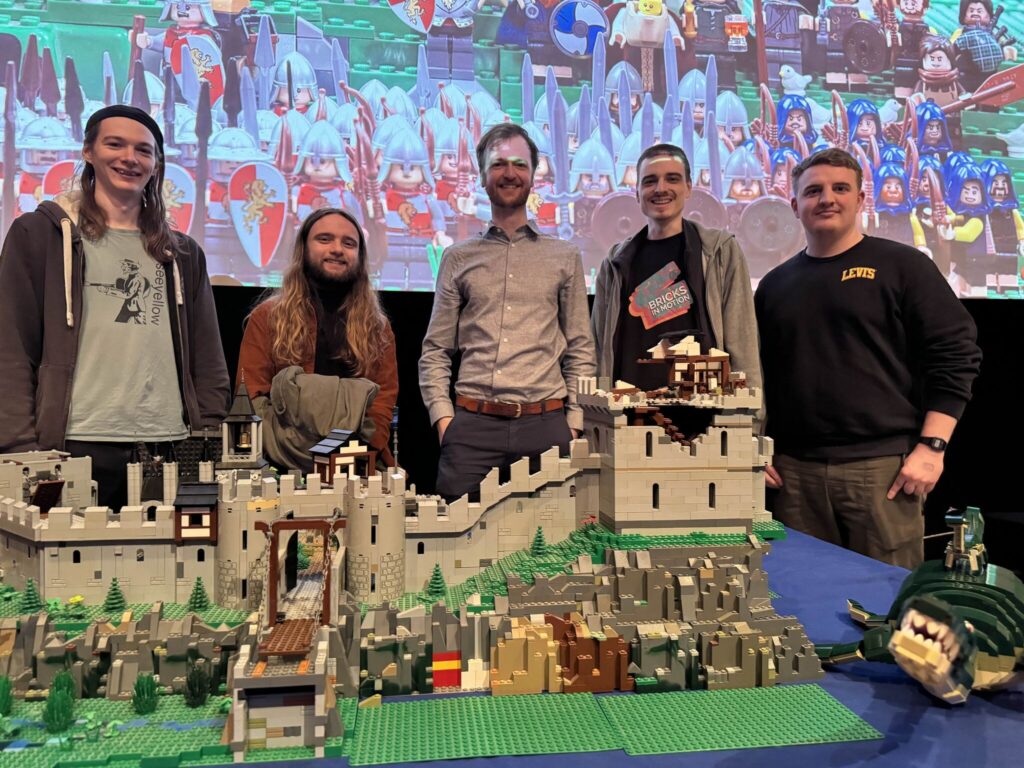
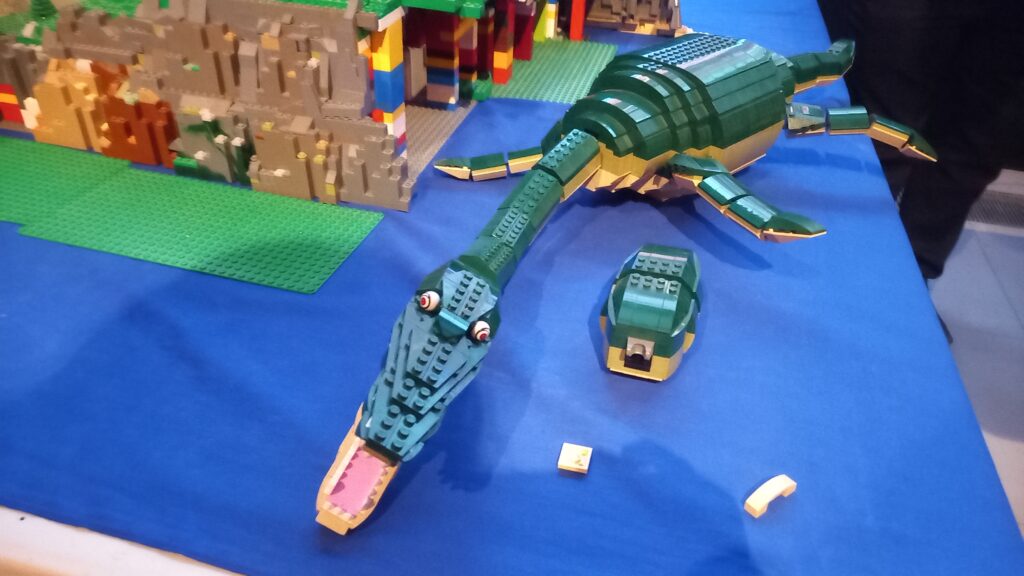
Welcome to the first issue of Lamplight Interviews. This will be a monthly series, where I speak with creatives in various industries. This first interview is with Joshua Chawner, a Birmingham-based physicist, stop motion animator and the creative mind behind Hamster Productions; a YouTube channel with over 230k subscribers. Since joining YouTube in 2007, Joshua has made many amazing LEGO stop motion short films, or Brickfilms, as they are referred to by the online community. Many of his videos have amassed tens of millions of views and some of my biggest early inspirations as an animator came from watching his films like The London Bank Robbery and Pirate Sea Battle. His film Loch Ness 1303 was screened at Chapter Arts Centre for this year’s Cardiff Animation Festival and after the screening, I got a chance to have a sit down interview with Joshua and talk about the festival, his work with the minutephysics YouTube channel, future projects and the surprising ways that science and animation overlap. The following is taken from our talk together.
Joshua’s film Loch Ness 1303 is up on his YouTube channel. Give it a watch!
Loch Ness 1303 was originally released in 2024, but you’ve enjoyed a good run with screenings. Can you tell me a little bit about the experience of seeing it be screened at a big cinema and getting in-person reactions from people?
Yeah, that is something I’ve really enjoyed more and more as time has gone on. When things were taking off I remember thinking, okay I’m going to release this thing on YouTube and it’s going to be seen by a lot of people, and so I started to do my own little premieres at home. Then there was the Kraken animation in 2015, when I released it. I was still doing these little premieres at home, but then Carlos from the film festival Cinebrick emailed me saying “I like your films! Submit them to Cinebrick in Portugal.” I flew out and we watched The Kraken and The LEGO London Bank Robbery.
That was my first experience seeing it on a big screen. You see people’s live reactions and that’s always valuable because you know what works, but then also quite affirming because this was supposed to be funny and everyone is laughing. With Barracuda Heist, I actually won the Audience Choice award in Lancaster, which is where I made the film. I really pushed it with Barracuda Heist and I got a number of screenings, but Loch Ness 1303 has been completely different. It has really taken off in a way I’m really pleased to see, but I wasn’t quite expecting that and it’s almost been like a full “tour” almost.
Do you think that’s largely you putting more time submitting it to different things, or do you think that there is something about the film itself that really resonates with people and works on the big screen?
I think it’s a mixture of those two things. Also, when I did go to an event I’d often talk to people who are very experienced at submitting their films to festivals and know exactly how it all works. So, learning from others was definitely a big part of that. With Cardiff, though, I mean, this festival has actually been absolutely amazing. We’re on the third day now of four. It’s just been absolutely brilliant from the beginning. I was aware of the Cardiff Animation Festival because I’d heard a few people mention it. I sort of thought, well it looks really awesome so I’ll submit and hope for the best. And lo and behold, here I am and they’ve screened it.
That’s great and I’ll say, myself, being in that queue of people and this is also not the only time that these films are being screened; it felt like, wow this is really special. It’s not just like there is this opportunity and they do offer these things, it’s the fact that people actually show up and are really enthusiastic for it and clearly there’s a lot of people that come every year.
It’s awesome to see so well attended and they have so much happening. All the sessions I’ve been to have been almost sold out or are basically full. It’s a wonderful opportunity, really.
As well as an animator, you are also a physicist. They’re not two things that obviously go together, but there is something to the actual calculative process of the principles of animation; like understanding the concepts of easing-in-and-out, or understanding the weight of an object that’s moving. So, I’m really interested to hear your thoughts on how both animation and science share a lot of components.
Yeah, so what I’ve discovered, coming from a physics background, you are considering the weight, you are considering the acceleration, speed, displacement. So, I do a lot of animation for science documentaries or educational stuff and in that case, I am directly animating physics. But then, for my action-comedy films, like the Loch Ness Monster (animating the monster itself), I’m trying to think about how this would work if this was from a physics’ perspective. You don’t want it to look artificial; you want to feel like it has weight, it’s pushing against things, it’s exhilarating, it’s easing.
Quite often, as I’m animating, I’ll scribble on a little note-sheet “de-acceleration of 5 studs per 10 frames” or whatever, so like I can actually work out for every frame, how many studs something should be moving roughly. I often approach it from that point of view, but what I’ve realised from meeting more and more animators, people who have generally grown up in the world of Animation and not the world of Physics, they do a lot of this stuff in the back of their mind. They wouldn’t be looking at numbers specifically, but the character will have weight, the character will be easing and having this acceleration; things do feel physically real at times.
When you become really experienced, it will have embedded in it, those physics concepts, whether you realise it or not and that’s really cool to see and I’m always continually impressed by what people manage to achieve, just through learning how things move, basically.
I think it’s really interesting because it shows that anyone has the ability to understand certain concepts, if it’s framed in a certain way. Just by reframing it, you suddenly think of it differently.
Yeah, yeah absolutely. It’s a really interesting thing to think about; how people inject their understanding of how things move and behave – inanimate objects as well as animate ones. It’s just amazing how lifelike things can seem when you can feel certain moments: maybe something bounces off something or there’s a car crash, or something like that. The way it’s animated, you feel the moment very powerfully.
Something else I wanted to ask about is that you work for minutephysics. How did that come about?
I think it was the beginning of last year, I was looking for things to do alongside my independent films. I was thinking about how I can keep making these independent films but allow the studio to grow as well and so I was looking at all these different options. I am kind of connected to Science YouTube as well as Brickfilming YouTube and I basically found out through the grapevine that minutephysics were looking for a producer and I was put in touch with Henry who has run the channel for a very long time and started the channel. I got this position and that’s kind of it, really. I fit in in a lot of ways, because minutephysics is a physical hand-drawn-style of video. Henry himself does the drawings, but occasionally I provide animation, or stop motion sections and then things like the editing, the writing and sort of exploring all the science; I do all of that as well. That’s how it came about. It’s a really awesome team and they’re very supportive of the independent stuff I do as well.
I still take on the occasional independent science project. Just recently, I did a short film for Ariel Space: it’s about putting together the James Webb Telescope and they use it for various outreach events. Minutephysics is kind of like a full-time enterprise, so I have time to do that and time to do my independent stuff and that’s pretty much it. You never know what might be coming down the road, though.
That’s brilliant. It sounds like you’re very busy. But, to wrap up, are you currently in the works for another big brickfilm project?
Yeah, so I just started production on the next big animation and this time, I’m trying to collaborate with other people to help. We’ve started putting a set together, starting to get the storyboard and narrative down. I am considering releasing it in parts, or like releasing a preview fairly early on; getting people excited, getting people on the Patreon to help support its completion. One difficulty I found with Loch Ness was essentially, I didn’t have anything to show anyone until I finished the whole film because I wanted to keep it secret. Obviously, there are advantages to that; like people when they see it are like “Wow, this is amazing!” but it also meant that until premiere day, no one had any idea what I had made and whether it was any good. So, I think I’m going to change that for the new one and get people to enjoy the journey you go on in making it, whilst also still thinking about the big picture at the end; maybe releasing a few earlier sections and then releasing the director’s cut final version.
Thanks for reading the first issue of Lamplight Interviews. If you would like to keep up to date on when I will be posting these, I will be sharing them to my various social media accounts and on the monthly blog.
1 thought on “Lamplight Interview #1 – Dr. Joshua Chawner (aka Hamster Productions)”
CJ
It’s really cool to read about the connections between art and science, especially as the two can oftentimes be pitted against each other. Excited to read more interviews!


It’s really cool to read about the connections between art and science, especially as the two can oftentimes be pitted against each other. Excited to read more interviews!