
Share this article:
Approx. 12 min read
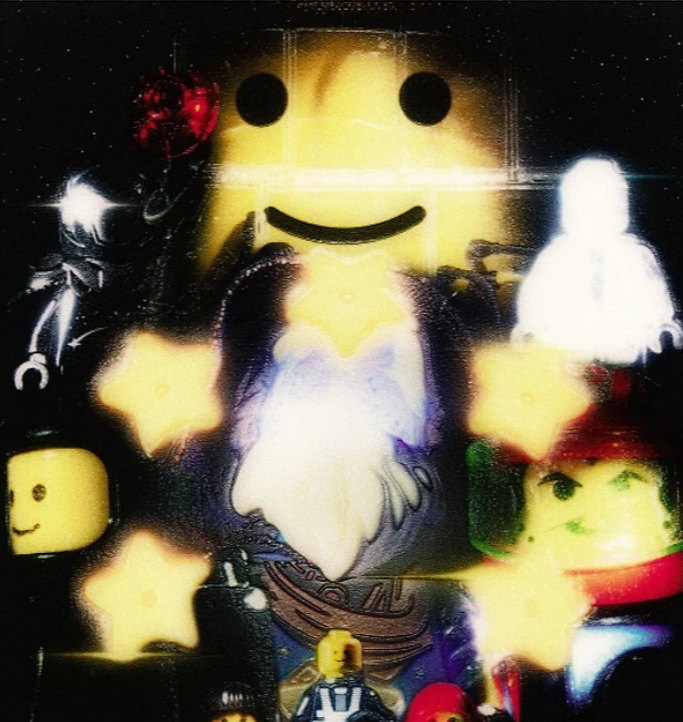
Welcome to Lamplight Interviews; the series where I speak to creatives in various industries. Leon, more commonly known online as Stanley Q-Brick, is a highly prolific German Brickfilmer (LEGO stop motion animator) who is currently on a streak of awards for multiple recent short films; in fact, even since this interview, he has just come 1st place in the annual BRAWL Contest with his film Comet Fever. He has developed an unmistakable style and has a widespread appeal beyond the Brickfilm community. Not long after meeting him for the first time at the annual Steinerei film festival in Germany, where his film And The Moon Bloomed bagged 4 awards, I had an in-depth conversation with Stanley. I hope you enjoy.
You’ve recently won several awards for recent films and have worked very hard to get where you are now. What has that journey been like for you?
The past few months have been pretty wild. There have been so many full-circle moments that fill me with joy. LEGO and brickfilming is deeply rooted in my inner child, and I do a lot of what I do for the little me. Young Stanley, who would browse [forums] for hours on end, would be so thrilled to know that he would become part of that community someday. I especially felt that way when I won THAC for the first time on the contest’s 20th anniversary. I’m only a few years older than the contest, so I pretty much grew up with it. I also try to push the medium forward with my work, so winning contests with that approach, or being recognized at the Steinerei Festival with a film that’s wildly different from the typical Steinerei genre film, feels very rewarding to me.
“Brickfilming for the little me” is a really lovely way to put it. I resonate with that idea a lot. Having that in mind keeps what you’re making personal to you.
It does. And I think it ensures that you keep doing something for the right reason. I’m not even sure I have a particular aim for my work, other than to repackage my thoughts and emotions into something visual and oftentimes, to make the little me happy. But of course, a big part about filmmaking is sharing your work with the world and it does feel very rewarding to receive feedback that my work can inspire others.
What was it like seeing your film on the big screen and getting to watch all the other films at the festival?
It was a very cool experience. It’s fascinating how much better films look when they’re projected compared to the compressed mess we see on YouTube. Streaming and on-demand consumption are killing texture in film and video. Every piece of organic texture gets eaten up by compression; it’s sad. It was also wonderful to meet so many people I knew from online spaces in person. I was very happy to finally meet you and the others from the community, as we had been in touch online for so many years before that. It was also great to meet so many new people. I’m already looking forward to the Steinerei event next year.
Am I right in assuming that your biggest inspirations are from film outside of brickfilming and if so, what would you say are your biggest inspirations?
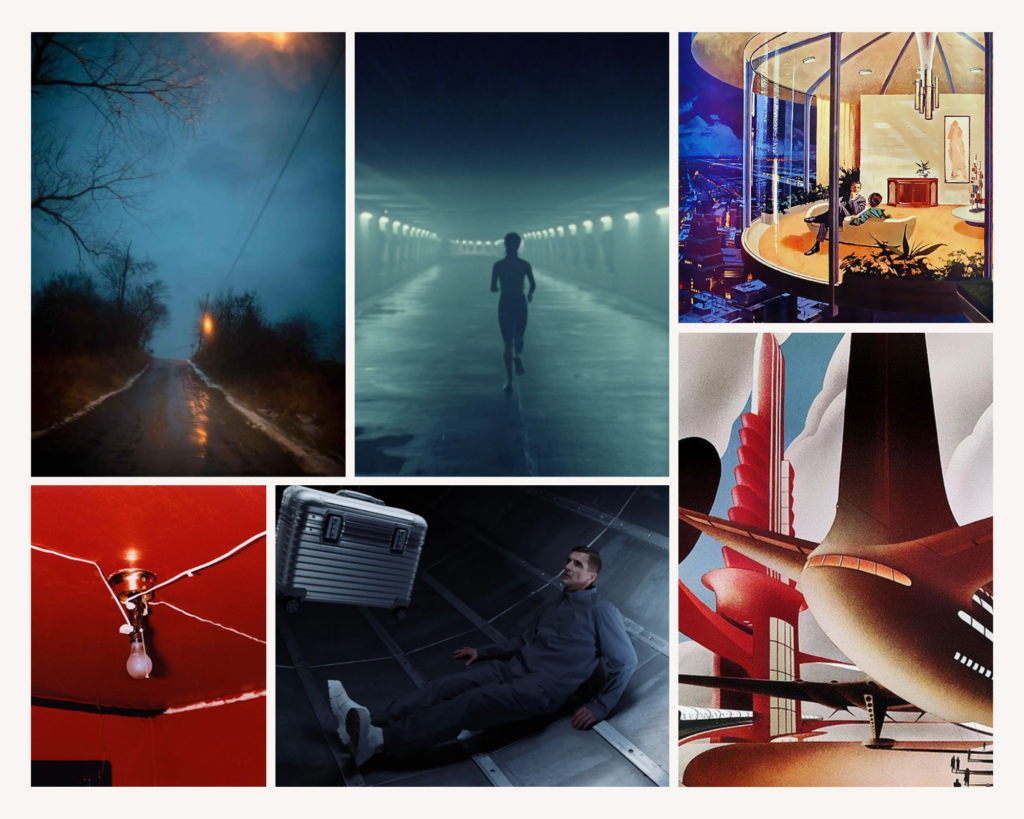
Yes, definitely. When I started, I wasn’t familiar with many recent brickfilms of the time, so I just jumped in blindly with my own ideas of how I wanted a brickfilm to look. Getting involved with the community around 2020 helped me build on the foundation I laid with my early projects, leading me to develop a distinct visual style that I was happy with. Stanley Kubrick has obviously been a big inspiration for me throughout my relationship with film, but I wouldn’t say that I am as visually inspired by him as I am narratively. Among my favourite contemporary film directors are Nicolas Winding Refn, Yorgos Lanthimos, David Lynch (RIP) and Christopher Nolan. But I think the commercial work of people like Albert Moya and Salomon Ligthelm inspires me visually as much as the photography of people like Todd Hido and William Eggleston does. And I really enjoy period-specific art, such as the retrofuturism of the 1960s by artists like Arthur Radebaugh and Charles Schridde. I’m also a big fan of Baroque and Renaissance art, especially grand paintings with multifaceted compositions.
That’s a really nice insight. I think it’s clear to see that you’ve taken a lot of influence from all sorts of different sources; not just film, but also art more broadly.
Totally. It’s so important to get inspiration from different sources. It allows the medium you work in to expand and receive new impulses from the outside. My fiancée and I often visit museums or art galleries when we’re in a new city, and I almost always come back home feeling inspired. Visiting art galleries that showcase local artists is also a great way to experience the city you’re visiting.
It was incredibly impressive to see you pull off your Cosmogenesis saga last year. How did you manage to create the series as planned and what tips would you give to people who might likewise want to make a big ambitious project?
Most of the work on the Cosmogenesis Saga seemed fairly light to me. I think that’s because I was so excited to explore the themes of these films visually. It really felt as if the stars had aligned for that project. It was enjoyable from start to finish, which is something I can’t say for all my projects. I especially liked designing the posters. The fact that people cared enough to buy them through my Redbubble shop made me really happy. My tip is to find something that excites you enough to keep working on it, and to find the right kind of motivation. Social media numbers aren’t going to keep you motivated; a subject matter in which you’re personally invested might do.
I thought The Memory Discrepancy in Sector C was a particularly unique take on nostalgia. I think people on the internet can become too trapped in nostalgia to the point where it starts to absorb their entire identity and outlook on life. Were these factors you considered when making the film, as it came across as a really captivating psychological exploration of those ideas?
Thank you for picking up on the themes so accurately. It was not so much a general observation of the recent trends toward nostalgia and anaemia as it was more of a personal processing of my emotions. I have gotten lost in the past many times before, and I wanted to visualize what that felt like. Due to my autism, I have an unusually pronounced episodic memory, and I clearly remember most of my life from very early childhood onwards. I cherish those memories from my childhood, but they always carry a distinct sense of sadness because I know I can never go back to that time. Another thematic element I wanted to carry this film with was the somewhat recent passing of my beloved grandmother. She means the world to me and is part of many childhood memories. It felt important to include the recording of her playing the piano in this particular film. Generally speaking I think it’s very difficult for humans to find the right balance between remembering and making new memories. Kierkegaard’s philosophical views also influenced this film. “Life can only be understood backwards, but it must be lived forwards” – It feels very accurate to me.
I think that quote is very poignant. Ultimately, our relationship with our past and our present need balance. I know from my personal experience, allowing myself to enjoy moments is something I’ve had to learn to do. I sometimes even feel a weird nostalgia for the present. Finding places of calm where I feel at peace, helped me a lot to appreciate the present more, but it took a lot of time. Conceptually, I found the film very moving and thought-provoking. Having that recording of your grandmother is a very touching tribute and I think it shows another side of nostalgia that is perhaps more tender and important to hold on to.
Thank you. I also had to learn to be present in the moment. For a large part of my life, I was either reminiscing about the past or wishing for a better future, without realising that I had many things around me at that time that I could have enjoyed much more if I had been present. I think I know what you mean about feeling nostalgic for the present. Sometimes, you experience a moment that feels so meaningful that you just know it will become nostalgic for you in the future.
I can definitely see people resonating with the deeper meanings behind your work and really thinking about them. I’ve shown the Cosmogenesis Saga and The Memory Discrepancy in Sector C to quite a few friends outside of the brickfilming community and they absolutely love them. They have a real universal appeal that transcends beyond the brickfilm community.
That’s great to hear! To me, exploring deeper themes in film means giving them a reason to exist. Evoking some kind of cathartic effect in the viewer is something I really like about making films. And to do that through the lens of brickfilming brings a unique perspective to the process.

Thanks for reading. If you would like to keep up to date on when I will be posting these, I will be sharing them to my various social media accounts and on the monthly newsletter.